Session XP: 0
C2 · BondingAQA GCSE Chemistry · 8462 (Triple)

Giant Covalent Structures

Diamond, graphite, graphene, silicon dioxide — structures and properties. Higher tier material science.

Best score
Last attempt
Best attempt progress
0
XP earned
Watch first
CognitoGiant covalent structures — diamond, graphite, graphene
Key facts & methods

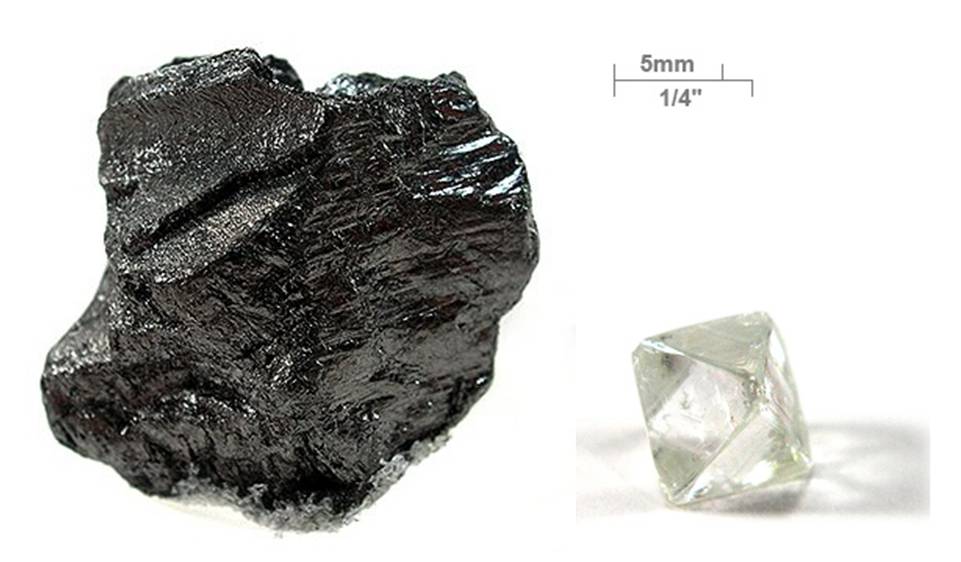
Diamond

  • Carbon atoms each bonded to 4 others by strong covalent bonds.
  • Forms a giant, rigid 3D lattice structure.
  • Properties: extremely hard (all bonds must be broken to deform), very high melting point, does not conduct electricity (no free electrons or ions).
  • Uses: cutting tools, drill bits, jewellery.

Graphite

  • Carbon atoms in layers of hexagonal rings. Each carbon bonded to 3 others covalently.
  • One delocalised electron per carbon is free between the layers.
  • Properties: conducts electricity (delocalised electrons free to move). Layers can slide over each other → soft and slippery. High melting point.
  • Uses: electrode material, pencil "lead" (lubricant), electrical contacts.

Graphene

  • A single layer of graphite — one atom thick.
  • Hexagonal arrangement of carbon atoms. Each carbon bonded to 3 others. Delocalised electrons present.
  • Properties: excellent electrical conductor, extremely strong (strongest known material), very light, transparent.
  • Potential uses: flexible electronics, ultralight composites, supercapacitors.

Silicon dioxide (SiO₂)

  • Each silicon atom bonded to 4 oxygen atoms; each oxygen bonded to 2 silicon atoms.
  • Giant covalent structure — all atoms linked by covalent bonds.
  • Properties: very high melting point, very hard, does not conduct electricity.
  • Found in sand and quartz. Used in glass and as an abrasive.
  • Compare: SiO₂ is like diamond but with alternating Si and O atoms instead of all C.
Exam questions — 4 questions · 10 marks · AQA 8462 style
Show all working — the AI marks against the AQA mark scheme. Method marks awarded for correct working even if the final answer is wrong.
1 markDiamond vs graphiteAQA 8462 style

Why can graphite conduct electricity but diamond cannot?

A Graphite has a higher melting point than diamond
B Graphite contains one delocalised electron per carbon atom that is free to move and carry charge; diamond has all electrons in covalent bonds
C Diamond is made of a different type of carbon than graphite
D Graphite is an ionic compound
3 marksWhy is diamond hard?AQA 8462 P1 style

Explain why diamond is one of the hardest naturally occurring materials. Refer to its structure and bonding. (3 marks)

Hint: Structure: giant covalent, 3D network. Each C bonded to 4 others. All bonds are strong covalent bonds that would need to be broken. Link to hardness.
+30 XP
1 markGraphene propertiesAQA 8462 style

Which of the following is NOT a property of graphene?

A Excellent electrical conductor
B Extremely strong for its mass
C Does not conduct electricity because all electrons are in covalent bonds
D Only one atom thick (a single layer of graphite)
4 marksCompare allotropesAQA 8462 style

Diamond and graphite are both allotropes of carbon. Compare their structures and explain why graphite is used as a lubricant but diamond is used as a cutting tool. (4 marks)

Hint: Two structures → two properties → two uses. Be explicit about why each structure gives each property.
+40 XP

Module complete! 🎉

Score loading...

+10 XP